


I remember exactly where I was in the Old Testament when I told my husband something I hadn’t fully decided was true yet: “This is either going to destroy my faith, or it’s going to make it stronger.” I’d hit a story — the account in Judges 19, if you want to look it up — that I genuinely couldn’t wrap my head around. A woman treated with unthinkable cruelty, her suffering carried through Israel afterward. It’s not a story anyone puts on a church program. It’s not one I’d ever heard preached. And there I was, sitting across from my husband, both of us having grown up in the same church, both of us stunned that neither of us had ever encountered it before. That moment ended up being the beginning of everything I actually learned from reading the Bible cover to cover for the first time.
We’ve All Cherry-Picked the Same Stories
Here’s what surprised me more than almost anything else: as I moved through Scripture, there was rarely a moment where I thought, “oh, I already knew that one.” David and Goliath, Joseph, Rahab, Jesus — those are the stories we all know, because those are the stories that get told from the pulpit and in Sunday school. But the Bible is enormous, and most of it isn’t those stories.
I started to realize why. It’s simply easier to talk about David than it is to talk about why God allowed something as horrifying as what happened in Judges 19. Talking about the hard stories means sitting in the tension of a question that doesn’t resolve neatly by the end of the sermon: why would God allow that?
I Went Looking for Answers and Found Something Better

When I hit those stories, I did what I imagine most people would do — I went to mentors in my church and asked what they thought. Almost every time, they didn’t know the story I was talking about. Not because they weren’t genuine believers. Their lives were simply full, and like most of us, they’d never experienced reading the Bible cover to cover as one complete story from beginning to end.
It’s a strange thing to realize you’re sitting in a room full of people who love God deeply, and somehow you’re the only one who’s read the whole thing. I felt like I was on an island by myself for a while — nobody to process the hard parts with, because most people simply hadn’t gotten there.
But here’s what came out of that: I stopped looking for someone else’s explanation and started leaning directly into who God actually is. Not into an answer for why, because I still don’t have one for everything. Into His character instead — good, righteous, loving, gracious, forgiving — even in the stories I don’t understand. Especially in those stories.
God Never Failed Her. People Did.
The clearest thing I came away with from that particular story is this: God didn’t fail that woman. People did — the same way people fail each other constantly, even the people closest to us. We also don’t know every detail of what happened; we weren’t there. But we can trust, even without full understanding, that God’s character doesn’t change based on how badly people around us behave.
That distinction — between what God allows in a broken world and who God actually is — became something I had to settle in my own heart before I could keep reading.
What It Actually Did to My Everyday Life
I didn’t expect this part: reading the Bible cover to cover didn’t just inform my theology. It started showing up in ordinary moments. When my kids are arguing, a story from Scripture comes to mind that actually applies. When I’m overwhelmed, I remember that God sees me — not abstractly, but because I’ve read the specific moments in Scripture where He saw people exactly like that. In the hardest, most broken moments, I remember obscure stories I wouldn’t know at all if I’d only ever heard the highlight reel version of the Bible.
No devotional gave me that. No single sermon gave me that. Only reading the whole thing, myself, start to finish, did.
I’m Not on a Pedestal, and I Don’t Want to Be
I want to be honest about something: I don’t have all of Scripture memorized or figured out. If I read that same hard story again today, I’d still be shocked by it. That’s part of what reading the Bible as a whole does — it keeps surprising you, no matter how many times you go through it, because there’s always more to learn.
What I do know, after all of it, is this: God is good. On the hardest days. In the stories I don’t understand. When the people around me fail me and I fail them. God is good — and reading the entire Bible, not just the parts we’re comfortable with, is what finally made that truth something I hold onto instead of just something I say.
A Tool for Reading the Bible Cover to Cover
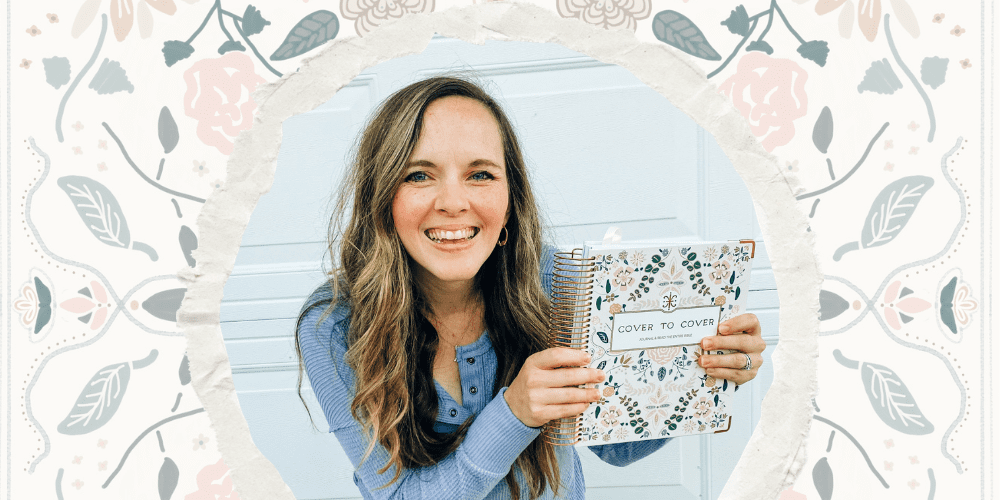
That experience is a huge part of why the Cover to Cover Bible Journal exists. Reading the Bible cover to cover showed me how much I had missed when I only knew the familiar stories and verses. I wanted a place to slow down, write through what I was learning, wrestle with the hard parts, and remember what God was showing me along the way. The Cover to Cover Bible Journal gives me that space while letting me move through Scripture at my own pace — no dates or pressure to keep up, just a place to keep showing up and reading the whole story.
Ready to read it for yourself — the whole story, not just the highlights?→ Preorder yours today — shipping mid-August. No dates, no deadlines, no guilt. Just you and God’s Word, at your pace, for as long as it takes.
Amanda Stores
If this encouraged you, I’d love to have you join me over on Instagram. It’s where I share more of the everyday moments, encouragement, and behind-the-scenes of this Cover to Cover Bible Journey.


Be the first to comment